The Art of Ultra-Privilege: How Bespoke Private Island Celebrations Redefine Advanced Luxury
Recent Trends in Ultra-Privilege Celebrations
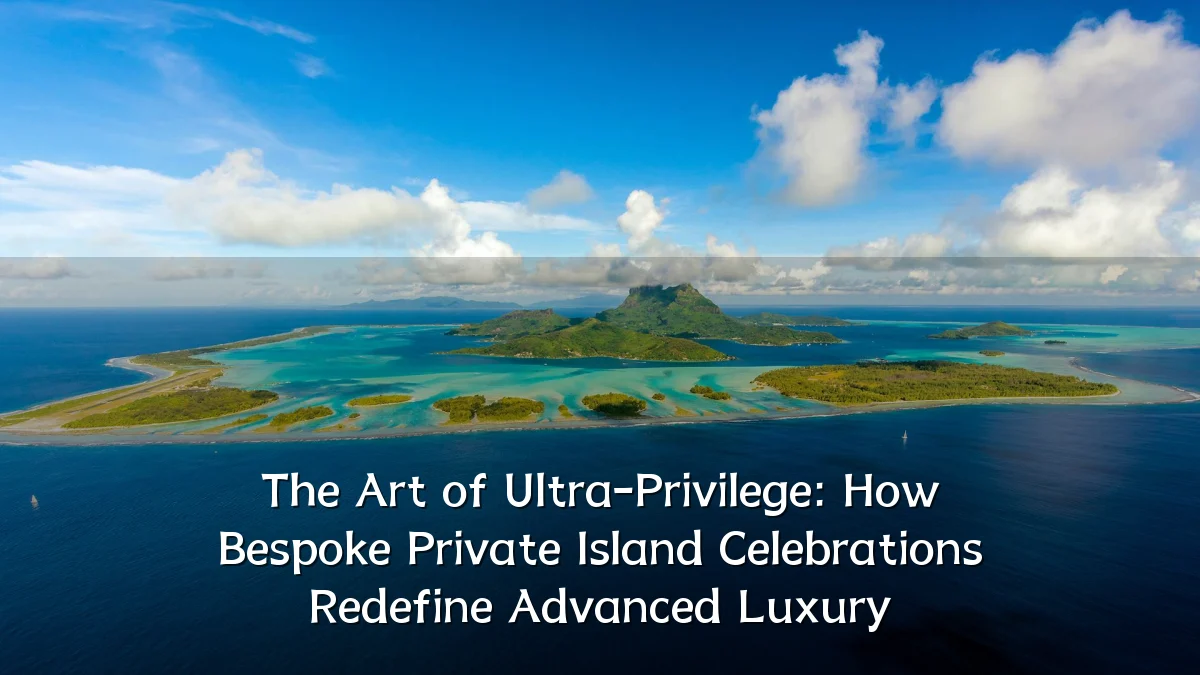
The concept of advanced luxury has shifted from opulent amenities to complete control over every moment. Recent years have seen a marked increase in demand for private island celebrations that are fully bespoke—where the host dictates everything from guest arrival logistics to the thematic arc of the event. Industry observers note a surge in multi-day, multi-generational gatherings that prioritize privacy and narrative coherence over sheer extravagance.
- Event durations now commonly span three to seven days, with dedicated teams curating daily micro-experiences.
- Clients increasingly request hybrid celebrations: milestone birthdays combined with charitable components or family reunions.
- Demand for real-time personalization (e.g., adjusting menus or activities on the fly based on guest feedback) is rising.
Background: From Exclusive Resorts to Fully Bespoke Domains
Private island hospitality long meant renting an entire resort. The current wave redefines "bespoke" as building the event infrastructure from scratch—temporary villas, pop-up kitchens, mobile art installations, and a dedicated fleet of vessels for guest transport. This evolution parallels broader luxury trends: high-net-worth individuals now expect not just privacy, but a narrative that reflects personal history, culture, or aesthetic vision. Vendors report coordinating between chefs, security teams, event designers, and local authorities for months in advance, turning each celebration into a temporary micro-nation of luxury.

Key enablers include improved satellite connectivity, modular luxury structures, and logistics companies specializing in remote-site operations. The cost typically ranges from high six figures to several million dollars, contingent on island remoteness, guest count, and level of customization.
User Concerns: Privacy, Sustainability, and Authenticity
Despite the allure, prospective hosts raise several recurring concerns:
- Privacy and security: Even with exclusive leases, aerial drones or passing yachts can intrude. Many now require non-disclosure agreements for all staff and geo-fencing technology.
- Logistical reliability: Weather delays, equipment failures, or supply chain disruptions can derail carefully scheduled events. Clients often demand redundant systems (dual generators, backup provisions).
- Environmental impact: Temporary infrastructure on sensitive islands raises ecological questions. Some destinations impose strict waste management rules; conscientious hosts now budget for carbon offsets or restoration programs.
- Value transparency: With opaque pricing structures, clients increasingly request itemized proposals and cancellation policies. Discreet brokerage services have emerged to advise on cost breakdowns.
Likely Impact on the Luxury Hospitality Sector
This trend is reshaping how ultra-luxury is marketed and delivered. Conventional five-star resorts now offer "private island escape" packages that borrow elements from bespoke celebrations. Smaller boutique operators are partnering with event architects to offer limited-edition, one-time-only experiences for high-net-worth groups. Local economies near private islands see seasonal boosts, though tensions sometimes arise over resource allocation and environmental strain. Meanwhile, the broader definition of "advanced luxury" is moving toward experiential depth rather than pure material display—a shift that analysts expect to influence high-end weddings, corporate retreats, and milestone events across other exclusive venues.
What to Watch Next
Several developments are likely to shape the next phase of ultra-privilege celebrations:
- Artificial intelligence integration: AI-driven concierge services that predict guest preferences before arrival, reducing human error in large-scale logistics.
- Sustainable certification: Possibly a rise of "eco-bespoke" certifications for events that adhere to rigorous environmental and social standards.
- Multi-destination series: Clients planning back-to-back celebrations across multiple islands (e.g., a week in the Caribbean followed by a week in the Maldives) with shared themes.
- Expansion to new geographies: Interest in less-accessible regions (Arctic private islands or remote Pacific atolls) as clients seek novelty beyond tropical coral islands.
- Legacy planning: Some families now use these celebrations as anchors for intergenerational wealth narratives, recording films and oral histories during the event.